
Escaping Data Chaos
Also on LinkedIn
This article was first published in the Escaping Data Chaos series. The stories in the series are composites of real projects, anonymised.


Blog / Data In
24 April 2026
Six months of physically impossible dissolved oxygen readings, because nobody checked at entry.
Errors are cheap to fix on day one. Six months later, in front of a funder, they are very expensive. Quality and validation is where good field observations quietly turn into unreliable data. Nobody did anything wrong. The system simply checked nothing until it was too late to fix. This post looks at what that costs, and at the environmental data standards that stop it at the point of entry.
A marine protected area programme I know collected water quality data from seventeen stations along a coast. It was two years of careful work, with strict field protocols and dedicated technicians. During the quarterly analysis someone finally plotted the dissolved oxygen readings on a map. Half the values from Station 9 were negative, which is physically impossible.
They traced it back. A new technician had inverted the sensor calibration six months into the dataset. Nobody caught it, because nobody checked ranges at entry. The data had been collected, reported and backed up before anyone saw the problem.
They could discard six months of work, or spend three weeks working out which records were salvageable. They chose the second. The analysis was delayed by two months, and the funder asked pointed questions about quality assurance that had no good answers. The science had not changed. The infrastructure had never validated anything.
The first is the absence of checks at entry. Most teams validate downstream, at analysis or, worse, during a presentation. By then a misconfigured device has put a hundred points in the wrong place, a unit error has run through every calculation and a typo has split one species in two.
The second is duplicates that hide. Data arrives from a cloud upload, from manual entry and from a partner in another format, and you end up with three copies of one observation. You only notice when a statistic makes no sense. Some duplicates are intentional but undocumented, such as one site sampled twice in a day for quality control. An analyst who uses both points gets a biased result without knowing it.
The third is mixed units. One team records Celsius, another Fahrenheit. Salinity arrives in PSU or in parts per thousand, and coordinates in WGS84 or in a local grid. I watched a team spend a week redoing a trend analysis because metric and imperial values had been mixed, and their growth rates were wrong by an order of magnitude.
The fourth is required fields that turn out to be missing. Observer, protocol version, equipment and exact coordinates are all in the protocol, but nothing in the entry system enforces them, so in practice they are optional. You find the gaps weeks later, when the field season is over and nobody can go back.
The aim is simple: catch errors when they are cheap. Put automatic rules at entry, not downstream. Give every numeric field a range, for example dissolved oxygen between 0 and 15 mg/L. Check coordinates against the study area and species names against a reference list. When an invalid value arrives, the system rejects it and the field team gets an alert while they are still on site and can resample. Tools such as KoBoToolbox, Survey123 or plain database constraints can do this, and you build it once.
Detect duplicates as data arrives, by comparing observer, site, time and values. Likely matches are flagged for review, and a legitimate replicate has to be documented with a reason that travels with the data.
Set one standard unit for each measurement, and convert on the way in. Nobody has to remember anything, and conversion errors cannot happen. Make the metadata mandatory, so a record cannot be submitted without it. It is a tiny friction at collection and it saves a great deal at analysis.
The programme rebuilt its intake along these lines, with range checks, coordinate validation and mandatory observer and equipment fields. When a calibration was inverted again, the system caught it within two hours. They recalibrated and resampled: two hours of fieldwork instead of three weeks of reconstruction. The funders stopped asking about quality assurance, because the data no longer had the problems.
Validation failures feel like a discipline problem, as if people only needed to be more careful. They are an infrastructure problem that keeps errors hidden until they are expensive. You do not improve data quality by asking people to be careful. You improve it by making the entry system refuse bad data, so the easiest thing to do is the right thing. Each check removes a whole category of problems from everything that follows.
Your field teams collect remarkable observations. Make sure your system catches the problems while they can still be fixed.
Escaping Data Chaos
This article was first published in the Escaping Data Chaos series. The stories in the series are composites of real projects, anonymised.
Keep reading
Start here
Data In
Data Work
Data Out
Data In
From the case studies
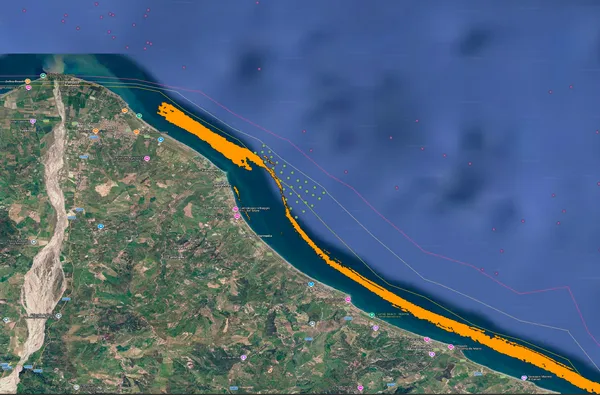
Marine protected areas and fisheries
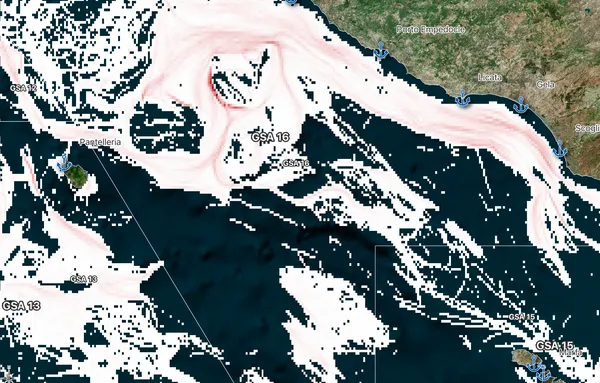
Offshore wind and fisheries
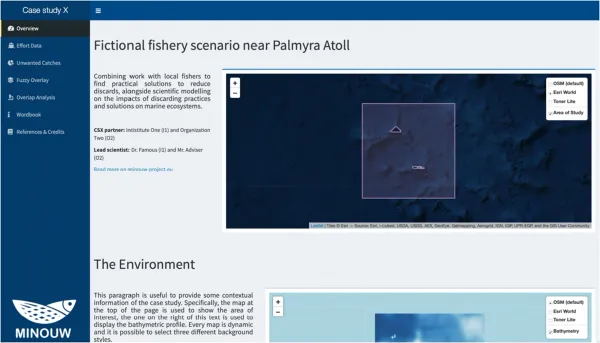
Fisheries, EU research
Case studies
Where to go next