

Blog / Series
What the Monster Taught Us
3 July 2026
What nine problems show when you read them together: errors compound upstream, knowledge evaporates, and visibility is a design choice.
Nine articles in, the monster looks different than I expected. It is not bigger. It is more predictable, and more systemic than I first described it. This post looks at what the nine problems show when you read them together. If you have not met the three heads yet, start with The Three Headed Monster.
What each head taught us
Head one taught us that errors compound upstream. Format chaos, failed validation and integration trouble are three problems with one pattern: every failure in how data enters your system is amplified by everything that follows. A species name recorded inconsistently in week one becomes a manual reconciliation job in month six. A sensor miscalibrated at intake contaminates six months of analysis before anyone notices. A versioning problem in one project phase becomes a barrier to multi year trend analysis three years later.
The point is not that collection matters, which everybody knows. The point is that upstream failures stay invisible until they become downstream crises, and by the time you feel the pain the damage is everywhere.
Head two taught us that knowledge evaporates without infrastructure to hold it. Analysis that resets every cycle, data that cannot reach the people who need it and reports that take three weeks of senior scientist time every quarter share one pattern: every capability your team builds lives in people and manual processes, not in systems. When people leave, the capability leaves. When manual processes reach their limit, everything stops.
The point is not that documentation matters, which everybody knows either. Without infrastructure, knowledge has nowhere to live except in people who will eventually leave, email threads that will eventually become unsearchable and spreadsheets that will eventually break silently, in ways nobody catches until a funder asks a question.
Head three taught us that visibility is a system design choice, not a communication skill. Compliance gaps that sink grant applications before the science is read, institutional knowledge that walks out with a member of staff and archives that quietly become unreadable all follow one pattern: excellent work becomes invisible at exactly the moments when visibility matters most, to funders, to partners and to the next generation of staff.
The point is not that presentation matters. You cannot communicate what your infrastructure does not make accessible. The gap between what you do and what you can show you do is a systems problem, not a communication problem.
The shift at problem four
Problems one to three in each head cost you time and effort. They make your work harder and slower and more dependent on heroic individual performance. They are painful and solvable, and they are felt inside, by the people doing the work.
Problem four is different. This is where the accumulated gaps stop costing you effort and start costing you opportunity. It is the spatial data that nobody outside your team can open or interpret, the public portal that does not exist, so a decade of monitoring reaches the world as PDFs months out of date, and the grant proposal you could not build fast enough because your best results were buried in folders.
These costs are felt outside, by the funders who chose someone else, by the partners who found your data out of reach and by the researchers who could not find your work and repeated it from scratch at much greater cost. Lost opportunity is the hardest loss to measure and the easiest to ignore. Nobody writes to say that the grant went to an organisation whose data infrastructure looked more credible. The rejection simply arrives, you move on and the pattern continues. That is what makes problem four the most dangerous in each head. It is not the most complex. It is the most invisible.
The last three
The final problem of each head is on the site. The Map Nobody Can Read covers geospatial management, Your Decade of Science Is a PDF Nobody Can Find covers public dissemination and The Grant You Almost Won covers grant proposals. They are the three places where the monster stops slowing you down and starts making you invisible to the people who matter most. Mapping the monster was always the easy part. These three are about where the map runs out.
Keep reading
Start here
Transforming Chaos to Clarity
Data In
The Format Free for All
Data Work
The Report That Eats Your Quarter
Data Out
When People Leave, Their Systems Vanish
Data Work
Your Decade of Science Is a PDF Nobody Can Find
From the case studies
Aquaculture and capacity building
OstricApp: an online network for Italian oyster farming
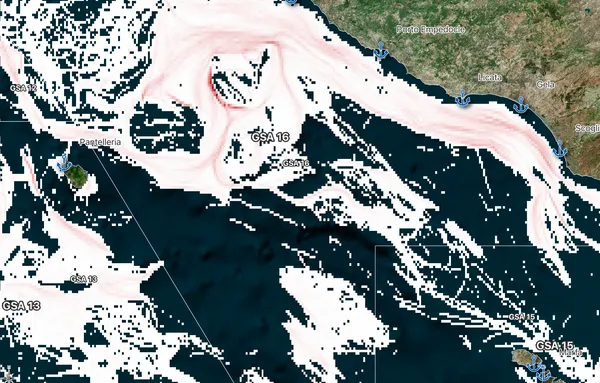
Offshore wind and fisheries
Where would the fishing effort go?
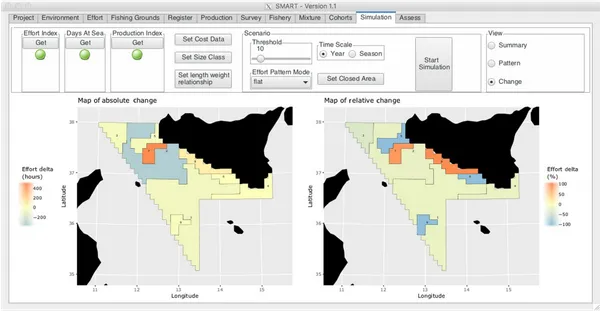
Fisheries management, EU research
smartR: test a fishing closure before it happens
Case studies
See all our case studies
Where to go next