
Escaping Data Chaos
Also on LinkedIn
This article was first published in the Escaping Data Chaos series. The stories in the series are composites of real projects, anonymised.


Blog / Data Out
8 May 2026
Ten years of data architecture in one person's head, and four months to reverse engineer it after she left.
When staff leave, their systems leave with them. Years of workflow expertise, methodological decisions and hard won operating knowledge walk out in a single transition, and what remains is spreadsheets nobody can interpret and systems nobody understands. This post is about institutional knowledge: what it costs when it lives in people, and how to keep an environmental database management system running when the person who built it moves on.
A marine research centre had a database administrator who understood its whole data architecture. She was the only person who knew where the data was stored, how the tables connected, which scripts ran the intake pipeline, how to recover from a backup failure, what the undocumented workarounds were and why some fields existed for reasons nobody else remembered. She had been there twelve years, and the organisation had grown around her. New projects worked because she knew how to integrate them, and data flowed because she maintained the pipes.
When she left for a university post, the centre found that there was no documentation: no README on the architecture, no runbooks for common operations, no guide to the scripts and no record of why the system was designed as it was. Her replacement spent four months reverse engineering it. In the meantime new field data piled up unprocessed, because nobody knew how to run the intake pipelines. The centre went from operational to chaotic overnight, and ten years of sophisticated infrastructure that had lived in one person's head left it back in spreadsheet chaos for half a year. It did not have a staffing problem. It had a documentation problem that showed up as a staffing crisis.
There is no onboarding documentation. Newcomers learn by osmosis: they follow the experienced person around, get verbal explanations and ask when something breaks. Nobody writes down how the system works, because the person who built it is right there to explain it, until they are not. A biodiversity monitoring programme lost a senior field coordinator who had spent eight years developing sampling protocols, building relationships with local communities and learning regional ecological patterns. She had trained fifteen technicians, but verbally, by demonstration. When she left, whoever replaced her had to rebuild everything from scratch, with no reference material.
Knowledge about data quirks never gets written down. Every dataset has quirks: edge cases, historical decisions that made sense once, missing data that means different things in different places. "Don't use the 2019 records directly, they are in a different unit and we only fixed it in the code, not in the raw data." "If the GPS coordinate is zero, zero, the device was not working that day." This knowledge lives in the people who found the quirks, usually the hard way, and the next analyst finds them the same way. A water quality team spent three weeks working out why a trend looked wrong. A senior analyst finally said that in 2016 and 2017 the probe at Station 3 had been miscalibrated, and that it was only corrected in the Excel calculations, not in the database. That one sentence saved them weeks, and it only existed because she happened to remember it.
Good practice stays unwritten. Your team has found efficient ways of working: a report format stakeholders understand, a validation protocol that catches most errors early, a reliable cleaning process. It exists as habit, not as procedure, so newcomers reinvent it and projects each develop their own approach. An environmental consulting firm had a senior ecologist who processed vegetation survey data faster and more reliably than anyone. Younger analysts who tried to copy her workflow missed steps or did them in the wrong order, because she could only explain it aloud. When she retired, her approach mostly retired with her.
New projects reinvent the wheel. A conservation programme starts a new monitoring initiative and builds a new data structure, analysis pipeline and reporting format, in spite of five earlier projects. Part of that is because the requirements really differ, and part because the knowledge of how it was done successfully before is not available in any usable form. Each project learns the same hard lessons on its own, and the organisation never benefits from its own experience.
Make critical operating knowledge available to anyone who needs to run your systems, whether or not the original person is still there.
Document one critical workflow now. Pick your most critical operation: the intake pipeline, the quarterly report, the backup, the analysis. Write one README that says how it works, where data comes from, how it is processed, where outputs go, what can go wrong and how to fix it. It takes a few hours for a complex workflow, and it serves everyone who uses it later. Then do the next one.
Keep a methods library that explains the why as well as the how. For each analytical approach and sampling protocol, record the reasoning: why this method and not another, what it assumes, what its limits are and how you validate the results. A new analyst then understands what they are doing instead of following steps.
Keep a manual of data quirks. Unit changes, format changes, edge cases, stations or periods that behave oddly, fields with strange values and the reasons why. Whoever finds a quirk while debugging writes it down at once, and future analysts read the manual instead of finding it again. This saves dozens of hours per person every year.
Build onboarding packages for each major role. For data managers: how intake works, how to troubleshoot and how to maintain the systems. For analysts: how the data is structured, which analyses recur and which methods you use. For field coordinators: the sampling protocols, communication routines and regional context. Onboarding becomes a structured transfer instead of informal shadowing.
Put documentation in the calendar. It does not happen in spare time. One afternoon a week or one day a month, set aside to update procedures and write down discoveries, makes it happen. When it is optional, it does not.
After the administrator left, the centre documented the whole system architecture, wrote runbooks for the common operations and built a methods library. When another senior person left two years later, onboarding took ten days instead of four months. The centre lost two people and kept its knowledge.
Knowledge loss feels like a staffing problem: keep people longer, train them better, improve the handover. It is a documentation problem that turns into a staffing crisis. When knowledge lives in people, people become irreplaceable. When it lives in systems, they can leave without taking the organisation's capability with them.
The change is not technically hard. It is a habit: document as you work, not when you are done, and write the README before it is urgent. Every documented workflow is one that nobody has to rediscover, and every newcomer who reads procedures instead of shadowing someone is productive sooner. Over three to five changes of staff, documentation becomes the difference between organisations that scale and organisations that start over each time someone leaves. Your expertise is an institutional asset worth protecting. Make sure it survives the transition.
Escaping Data Chaos
This article was first published in the Escaping Data Chaos series. The stories in the series are composites of real projects, anonymised.
Keep reading
Start here
Data In
Data Work
Data Out
Data In
From the case studies
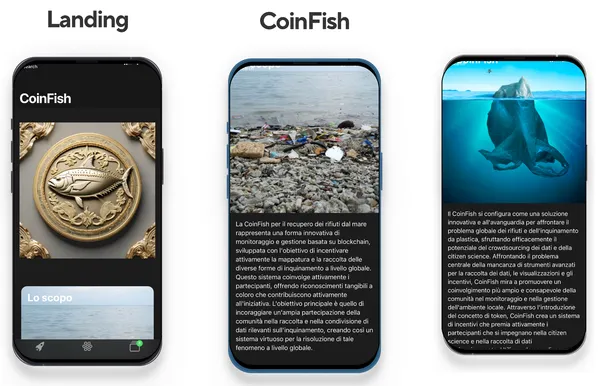
Marine litter, circular economy
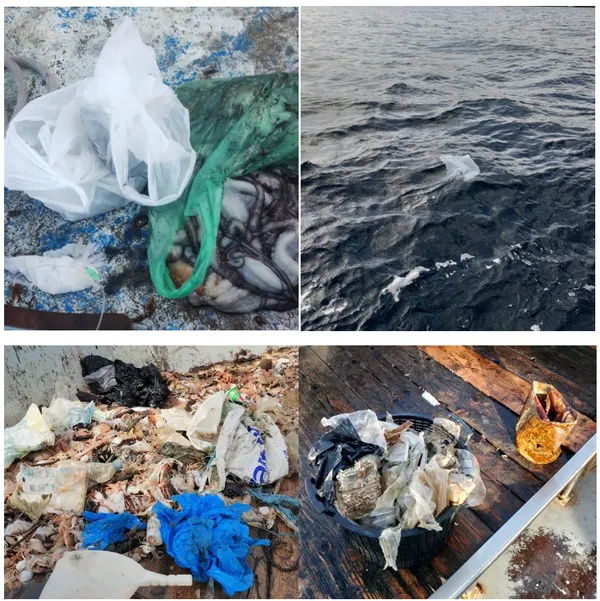
Marine litter, citizen science
Fisheries and marine research
Case studies
Where to go next