
Escaping Data Chaos
Also on LinkedIn
This article was first published in the Escaping Data Chaos series. The stories in the series are composites of real projects, anonymised.


Blog / Data Out
10 April 2026
An EU grant application rejected on procedural grounds before anyone read the science.
The science was solid, and the application was rejected before anyone read it. Compliance and documentation is where excellent research loses to mediocre research with better paperwork, and where the gap between what you do and what you can prove you do quietly costs you funding you deserved.
A conservation programme I know applied for a large EU Horizon grant. It was a competitive call, the programme had a strong track record and its preliminary data was impressive. The application required documentation of its data quality assurance procedures, its data protection compliance and an audit trail for its methods.
The practices were excellent: rigorous field protocols, careful validation and responsible data handling. None of it had been written down in one place. The procedures lived in email threads from 2019, the validation logic lived in one senior researcher's onboarding conversations and the privacy measures lived in a policy nobody had updated since GDPR came into force.
Three people were assigned to rebuild the documentation from scattered sources while the deadline came closer. One researcher spent two weeks combing through email archives to piece together validation protocols that had evolved over years. Another rewrote the methodology from memory, then spent days reconciling it with what the data actually showed. They submitted four days late, and the application was rejected on procedural grounds before the scientific review began. The science was never the problem. It never got the chance to be.
There is no audit trail by design. Most environmental data systems were not built to record what happened to the data and when. Records are edited without history, datasets are filtered without a note of what was removed and why, and calculations are updated without keeping the earlier version. When a funder asks for the chain of custody from a raw field observation to the final reported number, the honest answer is usually that you are confident it is right. Confidence is not an audit trail.
GDPR compliance exists in name only. Many organisations did a compliance exercise in 2018, produced some documents and never revisited them, while their practices moved on: new systems, new partners, new kinds of data. The documentation now describes an organisation that no longer quite exists, and the answers to specific questions have to be improvised.
The methodology is scattered through institutional memory. Why this sampling protocol and not another? How do you handle missing data? What are the known limits of your approach? Those answers exist, spread across senior researchers, old grant applications, conference talks and the occasional well commented script. They are not assembled anywhere, and nobody can retrieve them under deadline pressure.
Every funder wants something different. One programme asks for one metadata standard, a ministry for another, a private foundation for its own template, an international partner for yet another. Without a master framework to draw from, each new funder means building the compliance material from scratch, and the work never compounds because every output is custom.
The goal is not perfect documentation of everything. It is to have the right documents ready before anyone asks.
Begin with one master compliance document. It describes your data handling, quality checks, validation rules, access controls, retention and privacy measures, written to describe what you actually do and not for any particular funder. When an application asks for documentation, you adapt this document to its format instead of starting from zero. The effort is concentrated once and then serves every later application.
Build the audit trail into the system. When your database records every change and import with a time and a user, the trail writes itself. You do not document what happened to the data, because the system recorded it. A properly managed PostGIS database, or version controlled scripts, produces this as a byproduct of normal operation.
Keep a methods library. One short document for each major analytical approach: what it is, why you chose it, which assumptions it makes, what its limits are and how you validate the results. Written once and updated when methods change, it replaces an interview with the one person who remembers. When a funder asks how you calculated something, you point to the entry.
Adopt shared environmental data standards. Pick one open standard that fits your field, such as Darwin Core for biodiversity data or ISO 19115 for geospatial data, and document to it consistently. Translating to a funder's requirements then becomes a mapping exercise, not a reconstruction, and your documentation serves every relationship with one system.
After the rejection, the conservation programme built a master compliance framework. Its next major EU application carried a documentation annex that one researcher assembled in two days from the master document, and the application scored well on the data management criteria. The director told me: "We were doing everything right. We just couldn't prove it. Now we can."
Documentation debt feels like an administrative burden, something for when the real work is done. It is scientific credibility made visible. Good documentation builds trust with funders, reduces friction with partners, speeds up onboarding and protects institutional knowledge when staff change. Poor documentation is a weakness that appears at the worst moment, under deadline pressure, in front of a review panel, when the key person is away.
The programme's science was never in question. Its documentation gap was the whole problem, and the problem was entirely preventable. You probably do more right than you can currently prove, and funding is lost in that gap between practice and proof. Close it before someone asks you to.
Escaping Data Chaos
This article was first published in the Escaping Data Chaos series. The stories in the series are composites of real projects, anonymised.
Keep reading
Start here
Data In
Data Work
Data Out
Start here
From the case studies
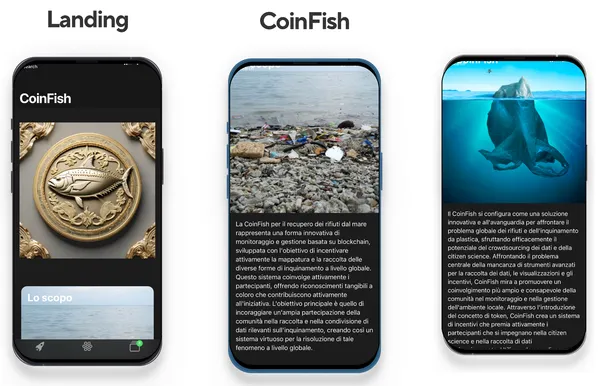
Marine litter, circular economy
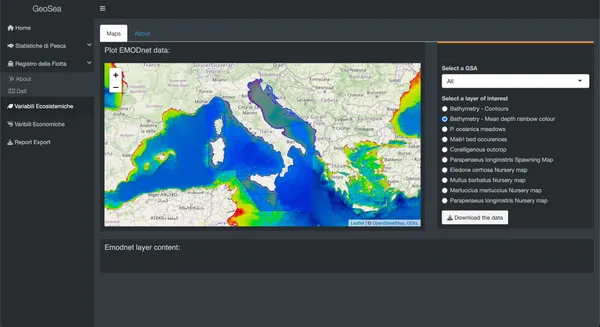
Marine science and fisheries management
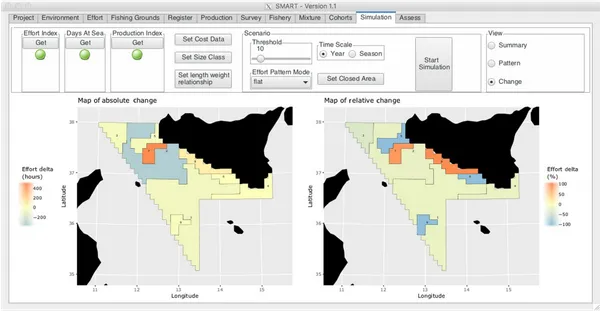
Fisheries management, EU research
Case studies
Where to go next