
Escaping Data Chaos
Also on LinkedIn
This article was first published in the Escaping Data Chaos series. The stories in the series are composites of real projects, anonymised.


Blog / Data Out
24 July 2026
A research group with stronger science lost to a competitor whose data infrastructure was better.
The opportunity was perfect. The science was ready. The infrastructure was not. Preparing a grant proposal is where all twelve infrastructure gaps from the series meet in one competitive moment. The call arrives and the deadline is three weeks away. Your organisation is the natural fit. Instead of spending those weeks on science, you spend eleven days finding files, rebuilding figures and working out which analysis version is the final one. Your competitor spends the same weeks on science.
A marine conservation programme I know had eight years of exceptional biodiversity monitoring across a network of protected areas. It had species distribution trends, habitat condition indices, recovery trajectories and climate vulnerability assessments, the kind of preliminary evidence that makes reviewers lean forward.
A major EU call appeared with a three week window. It was about coastal biodiversity and long term monitoring, and the programme's profile matched so closely that the director said it had been written for them. They had relevant preliminary data from six finished projects, but none of it was organised, ready to present or quick to reach.
Two days went on finding which projects held relevant data, with three researchers searching shared drives, email archives and external disks. Two more went on locating the final analysis versions, not the exploratory ones or the version shared internally before corrections. By day five they had a list of what existed and still had nothing usable. Days six to eleven went on rebuilding figures. The originals sat in QGIS projects that needed the original data paths to render, two projects were archived in formats that needed conversion before the analysis could be run again, and one project's figures had been made by a researcher who had left, in software the team no longer used. On day twelve they started writing the science.
They had four days for an application that deserved three weeks. They submitted something competent and incomplete, a proposal that pointed at their capability without showing it. The winning organisation had a shorter monitoring record and thinner preliminary evidence, but its results portfolio was always current. Its figures were ready in a shared library, and its data management description was one annex that it adapted to each call in half a day. It submitted at the end of the first week, spent the second refining the science and used the third for internal review.
The scores came back. The scientific scores were almost level. The data management and demonstrated capability scores were not. Eight years of monitoring lost to a shorter record backed by better infrastructure.
Past results are buried. Every finished project produces trend analyses, assessments, maps and figures, and they stay where the project left them, in its folder and format, organised for a team that no longer exists. When a call needs preliminary evidence, someone has to find it, work out which version was final and which figures were ready for outside eyes. The search can take longer than writing the proposal, and it often turns up drafts instead of final outputs. Your best evidence for the next grant is buried in your last six projects, and if you cannot reach it in hours it might as well not exist.
You cannot show systematic capability. Funders no longer judge only the science. Major programmes score data management as a separate criterion, and they want to know whether you can handle, share and preserve what a large grant will produce. The compliance documents are scattered, there is no methods library and the audit trail was never designed in. The application asks for evidence of capability and the answer requires improvisation instead of retrieval.
Preliminary data is not ready to present. Reviewers give each application a few minutes, and the figures in the preliminary data section decide whether those minutes turn into interest. A well made chart of a real trend is worth more than three pages of method. Most organisations have the trends but not the charts. The originals were made for an internal report, in the tool the analyst preferred, and redoing them at publication quality means rebuilding or hoping the old software still runs. Three to five days per project, across six projects, puts you past the deadline.
The disadvantage compounds. Missing one grant hurts. Missing grants every cycle because your infrastructure cannot match your science is a pattern. Organisations with better infrastructure win more grants, use the money to improve the infrastructure further, and write better applications the next time. Meanwhile your organisation does the same quality science and undersells it at the moment of evaluation.
When a call appears, you should be able to spend the whole window on science. Four things make that possible.
An always current results portfolio. One system, connected to your active project databases, shows your best results in a form ready to present. Key trends update as new data arrives, maps show current coverage without a manual export, and species assessment summaries are ready to adapt. You decide once what your strongest evidence is and automate the connections that keep it current. When the next call appears, you open the portfolio, pick the relevant results, shape the framing and use the rest of your time on science.
Prebuilt data management documents. Write one framework, not for a specific funder but as an accurate description of what you actually do. It covers quality assurance, audit trails, methods, preservation, access and sharing, and GDPR. Written in advance and kept up to date, it becomes an annex you adapt in hours instead of days. It also closes the gaps from the third head of the series: the compliance documents, the knowledge that left with a person and the archive nobody can open. Good environmental data management is the evidence reviewers are looking for.
A library of presentation figures. Produce each significant output at publication quality as a standard step of the analysis, not as a panic at the deadline. Store the figures in open formats with documented methods, organised by project, variable and period. When an application needs evidence from a project that closed three years ago, someone opens the library, finds the figures and adjusts the labels. It takes hours, not days. The only change is producing final figures twice, once for internal use and once for the library, and the extra effort is small.
A process for responding to calls. Treat the response as environmental project management, not as a crisis. Decide who reads the calls as they appear, who finds the relevant preliminary data, who pulls from the portfolio, who adapts the data management annex and who writes which section. Keep templates for the common sections, and a calendar of recurring deadlines so that opportunities do not arrive as surprises. Processes give better results than crises.
The programme rebuilt its grant infrastructure after that rejection. It connected the portfolio to its active databases, built the figure library from all eight years of finished projects and documented its data management. Seven months later a relevant call appeared and they submitted at the end of the first week. The second and third weeks went on refining the science and on internal review. The scores came back and they were ahead on both the science and the data management. Same science, better infrastructure, a different outcome.
Failed proposals feel like a time problem: a longer deadline, earlier news of the call, a dedicated grant writer. They are an infrastructure problem that makes your strongest evidence unreachable when it matters most. It differs from the other eleven because everything meets here. Bad intake means preliminary data that needs days of cleaning. Fragile analysis means figures nobody can reproduce. Poor documentation means you cannot prove your capability to reviewers who are looking for it. No archive means results you cannot reach, and no portfolio or library means past excellence stays buried. The deadline is where the three headed monster shows its whole face.
Fix the infrastructure and something changes beyond one grant. Your organisation stops underselling itself. Reviewers see a capability that was always there, funders gain confidence in your approach and partners want to work with you because your data is accessible and your methods are open.
That is what the series has been about. It was never data management for its own sake. It is about the gap between what environmental organisations do and what funders, partners and the scientific community can see them doing. That gap is an infrastructure gap, and infrastructure gaps can be fixed. Your science deserves to win. Build the infrastructure that lets it.
Escaping Data Chaos
This article was first published in the Escaping Data Chaos series. The stories in the series are composites of real projects, anonymised.
Keep reading
Start here
Data In
Data Work
Data Out
Data Out
From the case studies
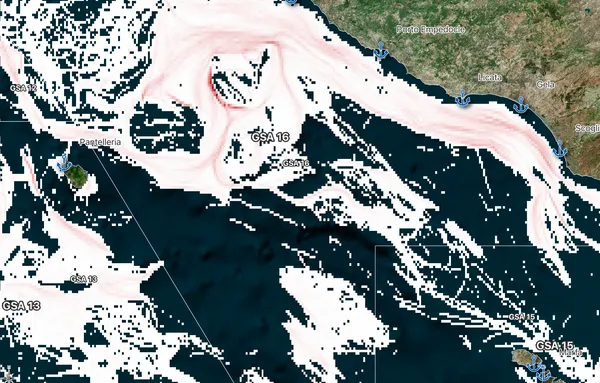
Offshore wind and fisheries
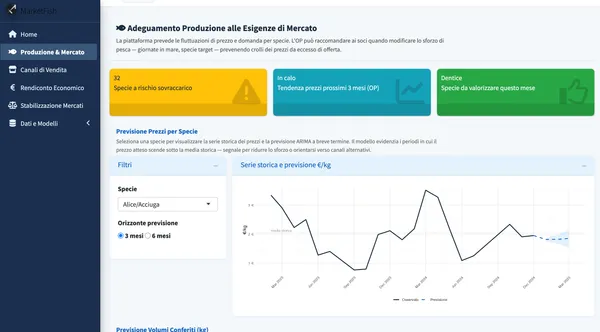
Fisheries, producer organisation
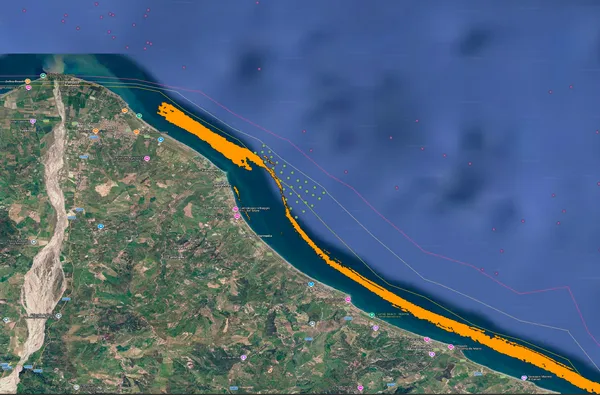
Marine protected areas and fisheries
Case studies
Where to go next