
Escaping Data Chaos
Also on LinkedIn
This article was first published in the Escaping Data Chaos series. The stories in the series are composites of real projects, anonymised.


Blog / Data Work
1 May 2026
Twelve stakeholder groups, one database, and no way to give each the right data without endless email chains.
Your data is brilliant, and it is inaccessible to almost everyone who needs it. Stakeholder collaboration is where data that should be shared ends up behind email chains, format conversions and access negotiations that take longer than the request itself. It is a question of environmental data management as much as of people: who can see what, in which format, and how fast.
A marine protected area programme juggled twelve stakeholder groups. The fisheries department wanted catch statistics in one format. The tourism ministry needed different measures. Local communities asked for summaries they could read, research partners wanted raw data and international assessments needed standard exports.
Every request set off the same sequence: extract from the database, reformat for that stakeholder, review security, compress, upload to a server, send a link, chase because someone lost the email, resend, wait for confirmation. One stakeholder asked for updated numbers three times in one month. By the third request the coordinator was spending more time reformatting data than running the protection programme.
Meanwhile field teams could not easily share observations with researchers, funders could not see preliminary results without a formal request, and partners worked with month old data because the current dataset was out of their reach. The data existed but was not available. The programme thought it had a workflow problem. It had an infrastructure problem.
There is no controlled access. Data goes out as email attachments because no system lets different people see different parts securely. Field teams hold the raw observations, researchers need processed data, funders need summaries and communities need visuals. Everyone gets the whole dataset or nothing, or someone curates separate versions by hand. None of these scale or update themselves.
Scientists cannot easily share with field teams. Field teams collect, researchers analyse, and the results should flow back so protocols and sampling sites can improve. But the analysis sits on a laptop and the field data sits in a database, with no connection between them. A coastal monitoring programme found a systematic bias in the sampling design of one region. The analysis was finished and the solution clear, and it took three months to reach the teams doing the sampling, who had spent months collecting biased data in the meantime.
Partners ask for formats you do not have. Your database suits your own analysis, and a partner needs another schema. An international assessment wants Darwin Core, a ministry a specific metadata standard, a university group long format instead of wide. You end up with five export pipelines kept by hand, all breaking when your data structure changes, and every new partner means a new one from scratch.
Collaboration runs on email attachments. Feedback on quality, corrections and questions about method all travel by email, and the current version of the dataset sits in somebody's inbox. Two weeks later nobody knows whether people are working with version 3.2 or 3.5, because the files are called "data_final_v2_ACTUAL_final_NEW.csv" in four different mailboxes. There is no record of who has which version or when feedback was applied, so a question like "when did we fix the temperature unit?" means searching an archive.
Make data available on demand, in the format each person needs, without intermediate steps.
Build role based portals. Each stakeholder group logs in and sees its own view of the data. Fisheries sees catch statistics updated from your database and shaped to its reporting needs. Communities see visual summaries in plain language, and research partners download datasets with their own filters. You build it once and it updates itself. Sharing and access are separate things: the data stays in one place under your control, and different people see different views of it. Everyone sees current data because there is only one current version, and clear environmental data visualization for readers who are not technical is part of that.
Transform formats at export. Instead of five hand kept pipelines, build one flexible layer. Your internal structure stays optimised for your analysis, and when someone asks for data they name the format they need. Darwin Core, CSV, long, wide or JSON comes out without manual work. Tools such as Apache NiFi, a small API or even well written scripts can do it, and the effort goes into building it once.
Close the loop with the field. When researchers find something about sampling protocols, data quality or regional patterns, it should reach the field teams through the system, not through a meeting three months later. The team learns that its data revealed a bias, sees what it means for its method and adjusts. This means building feedback into the pipeline, so that analysis is not a separate activity far from collection.
Keep a trail. When a partner proposes a correction it is logged, and when you apply it the change is recorded with a time and a source. Someone who asks what changed between two exports gets a clear answer. Database versioning and version controlled APIs do this automatically, so collaboration leaves a record instead of disappearing into email.
The programme rebuilt its collaboration this way. Each group reached its own view through a portal: fisheries saw current catch statistics, tourism saw visitor impact assessments, research partners downloaded raw data and communities opened visual summaries. When the database changed, every view changed with it. The coordinator stopped reformatting data. Stakeholders stopped asking for updates because the portal showed them. Field teams got feedback within days instead of months, and partners decided on current information instead of month old attachments. Same data, same stakeholders, a different capability.
Collaboration failures feel like a coordination problem: if only stakeholders used one format, stopped asking for custom exports, used the portal. They are an infrastructure problem that makes sharing hard by default. When sharing takes manual work, people ask rarely, because the process is heavy. When sharing is automatic, people look at the data whenever they need it and decide better. You do not improve collaboration by asking people to coordinate harder. You build a system where each stakeholder gets their view without asking anyone.
Current data drives better decisions, feedback reaches the field sooner, and collaboration that was invisible in email becomes visible in the system. Your data deserves to be shared. Make sure your infrastructure lets it reach everyone who needs it.
Escaping Data Chaos
This article was first published in the Escaping Data Chaos series. The stories in the series are composites of real projects, anonymised.
Keep reading
Start here
Data In
Data Work
Data Out
Start here
From the case studies
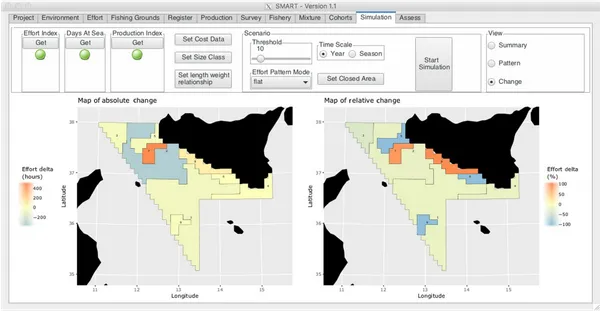
Fisheries management, EU research
Fisheries and marine research
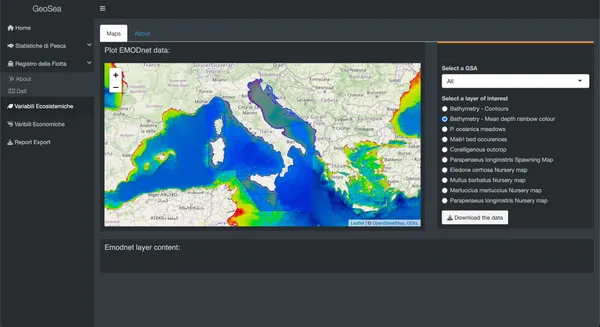
Marine science and fisheries management
Case studies
Where to go next